Author: Will W. Williams
-
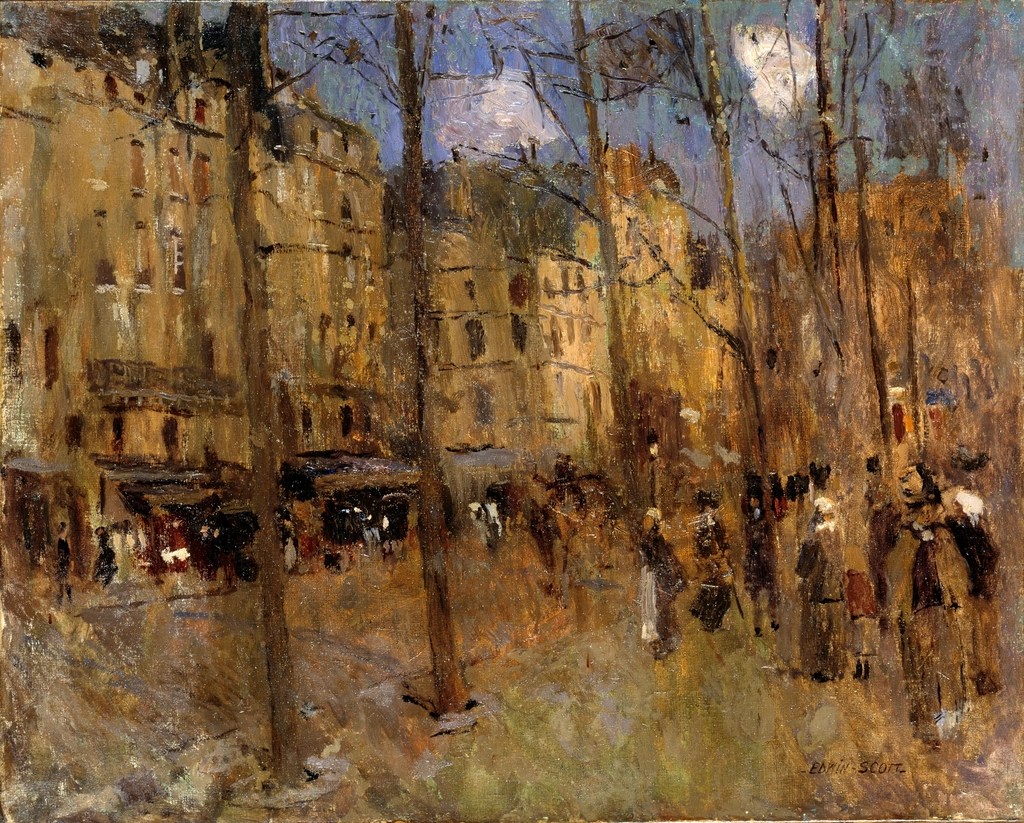
The Accordionist On Rue De Bienveillant
Simone worked at a small tobacco shop on the corner of Rue de Bienveillant in the heart of Paris. Her days were long and the job did not pay her well. She had always wanted to travel and explore the world—perhaps visit Japan or America. However, between her day to day worries and the rhythm of life in the city, she had never made the time to really look into it seriously.
She had begun working at the tobacco shop when she was in school, however, during that time she had become pregnant and had never finished. Since then, she had stayed at the shop, working long hours to support herself and her daughter.
The street of Rue de Bienveillant was not unlike many of the smaller streets in Paris. There were times when it was quite busy, with many people walking through to the larger streets on either side. There were also times when it was so quiet that she wondered whether or not she was still in one of the grandest cities in the world or a small town to the south.
During these quiet times, every now and then, an old man would sometimes begin to play his accordion in the street, a few shops down from Simone’s tobacco shop. She remembered hearing him playing when her daughter was only a few years old, and she had been so busy that she had never thought to stay and listen to him. She simply walked by him and would toss a few coins in his basket.
But over the years as things slowed down and Simone began to settle into her life, she noticed the old man more and more. She often wondered as she would pass him after leaving work why the man did not play during the busiest hours, but instead seemed only to play during the quiet times, late at night.
She suspected that the man lived in one of the apartments above the street, and perhaps came down to simply enjoy the sound of his music out in the city.
One night, she had had a particularly stimulating day in the shop—as a group of raucous foreign businessmen had spent a few hours there, talking to her about their travels—and so, being in such good spirits, she decided to stop and speak with the old accordionist.
“Why don’t you play along the big street, on the corner?” She said quickly, as she tossed a large handful of coins into his basket. She noticed that it had been empty before she did this, as it always was. But the old man only shook his head dismissively, and continued to play.
“What is your name?” She asked, determined to learn something, anything, about this man.
He looked up at her, still playing, his face very old and his eyes full of sadness. He said nothing, only continued to play.
“Well,” Simone continued, startled by the man’s eyes. “I hope you have a splendid night, Monsieur. I very much enjoy your music.”
She gave the man a nod of respect, understanding that he did not wish to converse with her, and then headed towards the metro and to her home.
She never spoke to the man after that, however, whenever she did pass him on the little cobblestone street, she still always threw a few coins into his basket.
~ ~ ~
Years later, her daughter had grown and was quite a fine young woman—quite beautiful and with strong academic promise. She had been accepted to a university in Tokyo with a full scholarship, and Simone had seen her off to Charles de Gaulle airport with more than a few tears in her eyes.
She did quite well, and though Simone kept in touch with her, the calls came more and more infrequently as her daughter became adjusted to her new life.
It was during these years that Simone began to become sick. Not severely so, but she began to feel bouts of tiredness and pain.
When she went to the doctor, they told her that she was unwell and would no longer be able to work at the tobacco shop. They said the smoke, from the years and years of it, had caused her to develop cancer. She could not afford the treatment, and so the doctor recommended rest.
Her daughter told her of a new treatment in Tokyo, but it was quite expensive.
“It looks very promising mother! You would just need enough for the visit and the treatment, I can help as much as I can, but you will still need to find the money.”
Simone hung up the call, and let out a long sigh. She was so tired. She knew she would not be able to find the money, and so she lay down on her bed, listening to the city below her, and fell asleep.
She awoke several hours later to a knock at her apartment door. Standing up, slowly, she straightened her hair, wondering who it could be. She received very few visits these days.
She opened the door, expecting to see her friend Lea or possibly a neighbor in need of something, but there was no one there.
She glanced around, before noticing a small envelope on the floor in front of the door. She bent over, picked it up, and read the small, messily scrawled words on the unstamped envelope.
It read:
“From the accordionist on Rue de Bienveillant.”
-

On the insanity of poetry
Perhaps my favorite poem—when you are old by W.B. Yeats—is such a fiery example of the insanity of poetry, and the beauty.
I recently downloaded a libravox collection of readings of this poem, and it’s fascinating to hear it read by over ten different people.
Some clearly have a deep love for poetry and a history with the art form. While others simply read it as if it were a classroom assignment.
But what really caught my attention is that they are all reading the same version of the poem.
In this version, the final line goes as follows:
“…love fled, and paced upon the mountains overhead, and hid its face among a crowd of stars.”
But this is not the version that I know. In the version that I know, and have committed incessantly to memory, the final lines goes as follows:
“…love fled, and paced upon the mountains overhead, and hid his face amid a crowd of stars.”
To most people, I assume, this really makes no difference, and in fact the libravox version is actually more grammatically correct. But the beauty of poetry and the insanity of it is that sometimes grammar can be broken for a much more beautiful end.
I can’t explain why, but when you recite this poem at night, whether alone under a blazing night sky or beside loyal friends next to a sparkling fire, you’ll understand why the original version is the correct version of the poem—and why it is the most beautiful.
-

Rant on Robots and Sex
I’ve seen this thing a lot lately online. A lot of women say that they won’t date a man who watches porn, or even that watching porn is cheating. But I would be willing to bet that a large percentage of those women own vibrators.
Now—I’m not saying that I think porn is good. It objectifies people, visualizes the sexual experience, and not to mention the actual origins of the material in terms of the people involved (whether it was something done ethically or, most likely, not).
But at least pornography is OTHER HUMANS fucking.
Is it more unethical to pleasure oneself to other humans or to a robot? I’m honestly not sure. But I think that the obvious answer is that neither one is ideal.
Another gripe I have is the way society treats women with vibrators compared to men with sex dolls. Women with vibrators are like liberated heroes celebrating their sexuality while men with sex dolls are categorized somewhere between serial killers and pedophiles.
I don’t own a sex doll—I bought a “flashlight thing” once and that was a fucking mistake. I’ve never felt more like a psychopath than when I used that plastic piece of shit.
But I don’t get why it’s so normalized with women? Like isn’t a robot dick with no body or human features pretty much the most inhuman way you could get sexual pleasure?
At least with porn you might be fantasizing about the pornstar, imagining that you are with them or something.
But what are you imagining with a vibrator? Are these women Star Trek fans and they are imagining that Data gave them his dick to fuck themselves with while he watches from a safe distance?
I dunno.
Maybe women conceptualize sex in a different way than men.
But to me, the beauty of sex is not as much about the level of physical pleasure but rather the connection and romance that the mind builds around the experience.
After all, they do say that the brain is the biggest sex organ ;)
Call me crazy, but I just feel that actual HUMANITY should be a requirement for experiencing sexual pleasure. Otherwise why not fuck a pig or a goat? But at least a pig or a goat is a mammal. Not a fucking robot. But maybe I’m just old fashioned that way.
-

in the shadows (poem)
in the shadows
there are moving things
swirling and slithering
sliding and slipping
but the moon is so bright
and the stars alight
and the wind blows so cold
with a whisper and a kiss
and it’s a wicked wind
come up from the south
and the people are silent
and the days are so loud
and I’m here stuck wasted
by the wayside to side
singing and slinging
writing and spiting
hoping and clinging.
but what if the shadows
became slow the light?
and the daylight so faded
and the night turned bright?
and what if the moonlight
turned gray to green
and the shadows ‘came brighter
and the trees grew clean
and if I could speak
Just a speck of my soul
I would tell it so proudly
that the heavens would spoil
and if I could ponder
why the hopeless recoil
I’d whisper so softly
Need fear not the foil -
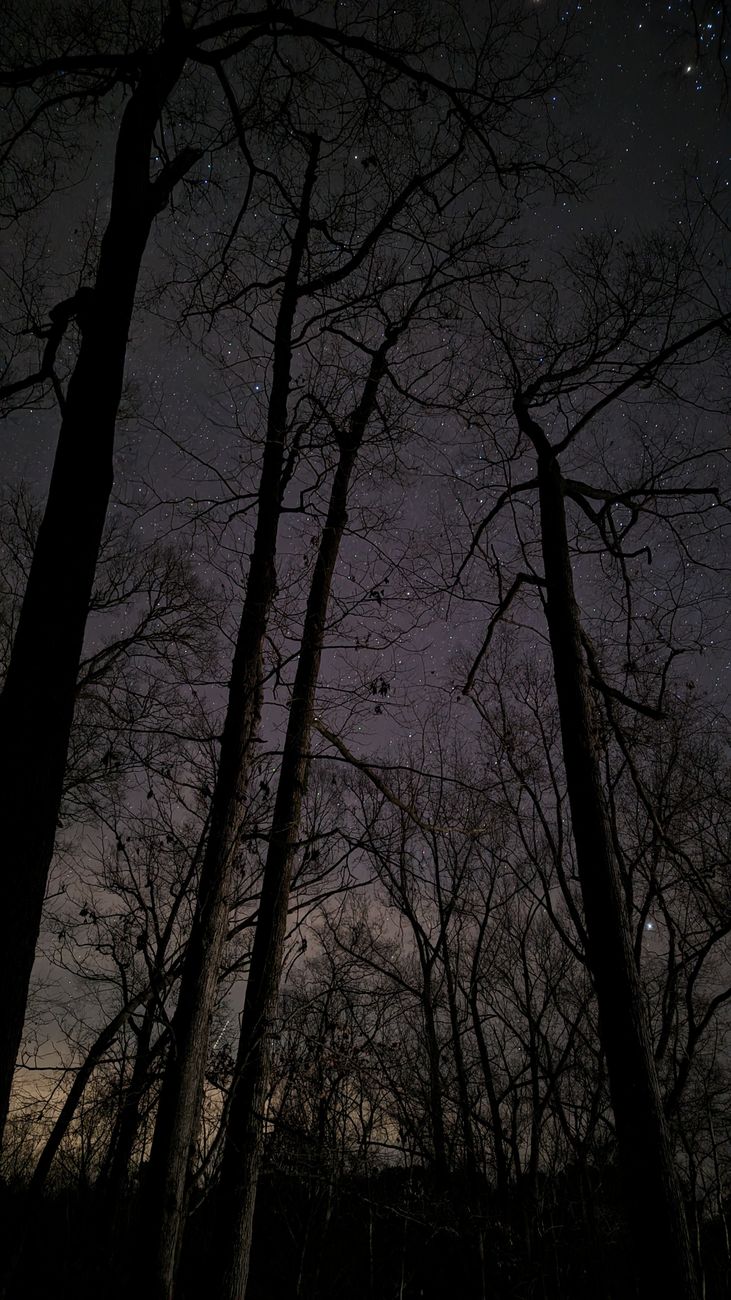
and the stars (poem)
I like this land
in the nighttime
I imagine it is the only thing I love
about it
for the nighttime here
is quiet and old
and full of memories
of a time that was taken
and a time that one day will
return
But I am far too loud
And foolish
chasing histories that have
long since died
And I have this idea
A dangerous one
that I cannot expunge
of a vision of love
that would transcend the sorrow
and the dirt
and the soul-gunk
and the shit
and I would climb up
up on to the roof
of my trailer
surrounded by nothing but trees
holding my baby girl
and kissing her
and pointing to the night sky
and the stars.
-

String (short story)
Alfred was sitting on his bed, his neck half propped up against a quite unfortunately abused pillow, scrolling on his phone, when he felt a sudden itch in his nose.
Reactively, he reached his left hand up to scratch it, thinking it may have been a speck of dust or a gnat or just a random itch, only half speculating.
With the itch resolved he lowered his hand. But then it came back, this time more immediate and much more irritating.
Alfred stood up quickly and reached for the box of tissues by his bedside. He blew his nose firmly, thinking that this would be the end of it, balled up the tissue, and then tossed it in the small, plastic wastebasket in the corner of the room.
As he turned to return to his bed, he looked down and noticed a piece of string—hanging right in front of him—hanging from none other than his left nostril.
His stomach lurched in disgust, and he stopped, reaching up carefully to remove it. But as he began to pull the string, it only kept unraveling and unraveling—longer and longer, coming from deep inside his nasal cavity.
Alfred was feeling a strange mix of terror and disgust as he kept pulling this mucus covered string from out of his nose, unsure if whether or not this would be his undoing. He pulled slowly on the string until some four feet’s worth of it hung in front of him with the end still not visible or noticeable in his nostril.
Finally, after about six feet of string slid irritatingly through his nasal canal, he felt a lurch and felt a clump inside his upper airway attached to the piece of string.
With disgust and panic he yanked the string hard with one pull and out of his nose came a little ball of paper, attached to the end of it. It landed in front of him on the floor.
Alfred looked at this strange thing, then glanced around wondering whether this was a dream of some sort. No, this was waking life, he was sure of it. But what on earth was this string doing inside his nose and how had he not felt it before? He knelt down beside the balled up piece of paper attached to the string and examined it. It seemed to be some kind of little crumpled up note.
With disgust, he pried the mucus covered thing apart, a sense of dissociation coming over him at the strangeness of the situation, until it lay open in front of him.
It simply read this: “smell yuh later.”
Alfred sneezed, threw the note and string into the trash, and plopped back down on his bed to proceed to continue to scroll on his phone.
 Will W. Williams